The chimney gets the attention, but the fireplace end of the system has its own list of wear points: firebox brick and mortar joints, refractory panels, dampers, smoke chambers, hearth extensions, doors and screens, gas connections and controls.
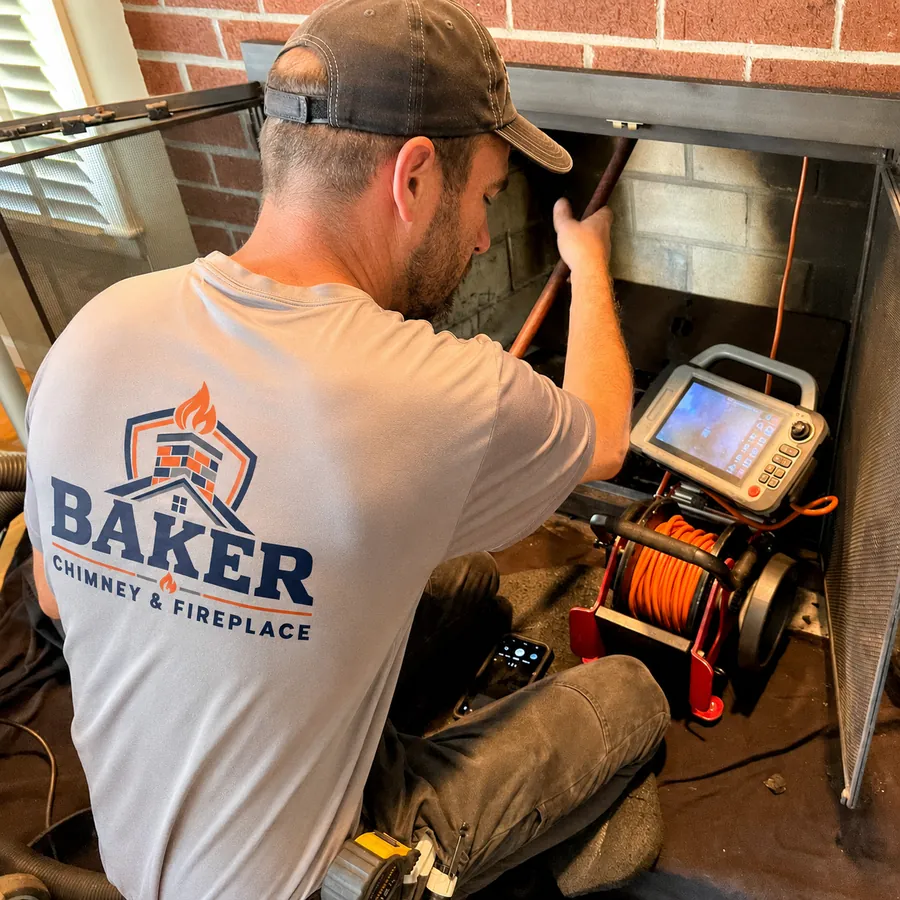
A fireplace inspection works through that list methodically, for wood-burning, gas and factory-built units alike — so you know the whole system's condition, not just the part that's visible from the couch.
Firebox condition: cracked brick, open mortar joints, damaged refractory panels. Damper operation and seal. Smoke chamber condition and buildup. Hearth and clearances to combustibles. On gas units: burner, pilot or ignition operation, log placement, and visible connections.
Before the season starts. When something changed — smoke behavior, smells, staining above the opening, difficulty starting or controlling a fire. After buying a home. Alongside a chimney inspection, so the two ends of the system are evaluated together.
These services often go hand in hand with fireplace inspection:
They cover different ends of one system and are commonly done together. The fireplace inspection focuses on the firebox, damper, smoke chamber, hearth and appliance components.
Yes. No creosote doesn't mean no wear — burners, ignition systems, venting and connections all age. See our gas fireplace service page.
We document it with photos, explain what it means, and give you practical options. You decide what happens next.
Baker Chimney & Fireplace serves three primary hubs and the communities around each, within roughly a 45-mile radius. Find your city below.
Send a few details and we'll follow up. Prefer to talk it through? Call 720-835-1233 — 24/7.