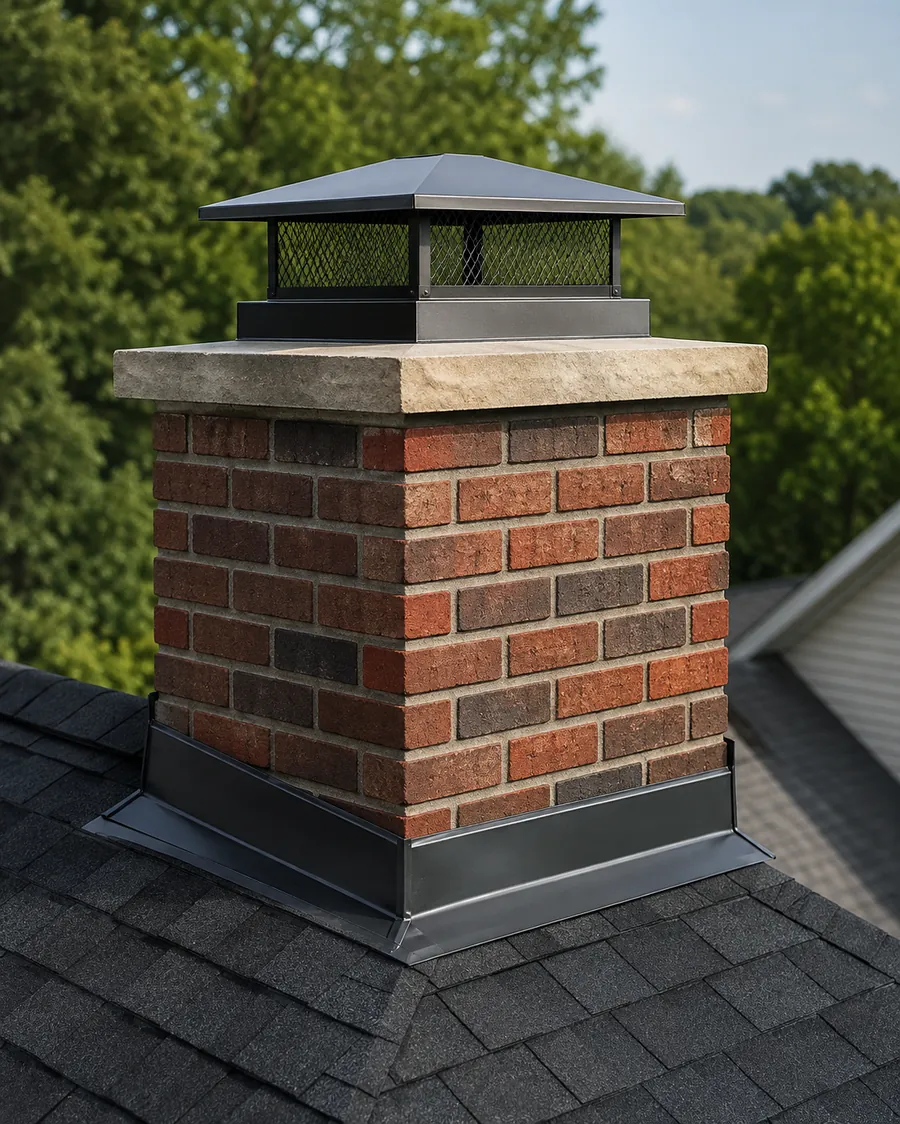
Brick and mortar are porous — they absorb water. In a freeze-thaw climate like Colorado's, that absorbed water freezes, expands, and breaks masonry apart from within. It's the engine behind spalling brick and crumbling joints.
Waterproofing applies a penetrating, vapor-permeable water repellent to the masonry: rain beads off, but moisture already inside the structure can still escape. That 'breathability' matters — sealing brick with the wrong product traps moisture and makes freeze damage worse.
After masonry repairs, to protect the investment. On chimneys showing early signs of water absorption — dampness after storms, minor efflorescence — before real damage starts. On weather-exposed stacks that take the brunt of wind-driven rain and snow.
It's not a fix for a cracked crown, failed flashing or eroded joints — water pouring through a defect ignores surface treatment. Those problems get repaired first; the repellent then protects the restored surface. Done in the right order, the combination significantly extends masonry life.
These services often go hand in hand with waterproofing:
Quality penetrating repellents typically protect for years; exposure and surface condition affect the interval. It's maintenance, not a one-time forever fix.
Penetrating repellents are designed to be invisible once cured — no gloss, no film.
Repairs come first. Repellent over open cracks or failed joints just hides an active problem.
Baker Chimney & Fireplace serves three primary hubs and the communities around each, within roughly a 45-mile radius. Find your city below.
Send a few details and we'll follow up. Prefer to talk it through? Call 720-835-1233 — 24/7.