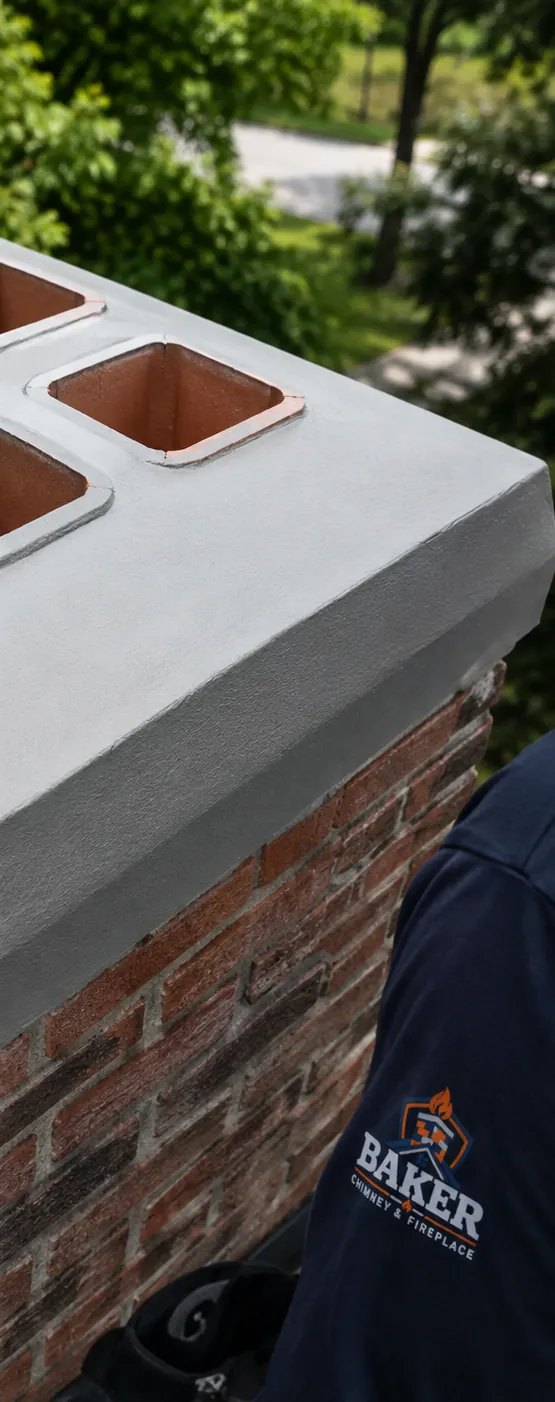
The crown is the concrete surface that tops the chimney and sheds water away from the flue. When it cracks — and with Colorado's freeze-thaw cycles, unprotected crowns crack — water gets into the heart of the masonry, and every winter makes it worse.
Crown problems are top-of-the-list finds in our inspections, because they cause so much of the damage we later see lower down: eroded joints, spalled brick, interior leaks.
Minor surface cracking can often be sealed with purpose-made crown repair material, restoring the waterproof surface at modest cost. Crowns that are badly cracked, delaminating or improperly built in the first place — too thin, no overhang, poured tight to the flue tile — are rebuilt so the new crown actually does its job.
Adequate thickness, a slope that sheds water, an overhang that drips water clear of the brick below, and a bond break around the flue tile so expansion doesn't crack it. Many original crowns have none of these — which is why they fail early.
These services often go hand in hand with crown repair:
From the ground you usually can't. Crown condition is checked from the roof — one of the reasons periodic professional inspection pays for itself.
Every freeze-thaw cycle works on an open crack. If winter is coming, at minimum a temporary seal is worth discussing; we'll give you a straight answer for your situation.
No. The crown is the concrete top of the chimney structure; the cap is the metal cover over the flue opening. They work together and we service both.
Baker Chimney & Fireplace serves three primary hubs and the communities around each, within roughly a 45-mile radius. Find your city below.
Send a few details and we'll follow up. Prefer to talk it through? Call 720-835-1233 — 24/7.