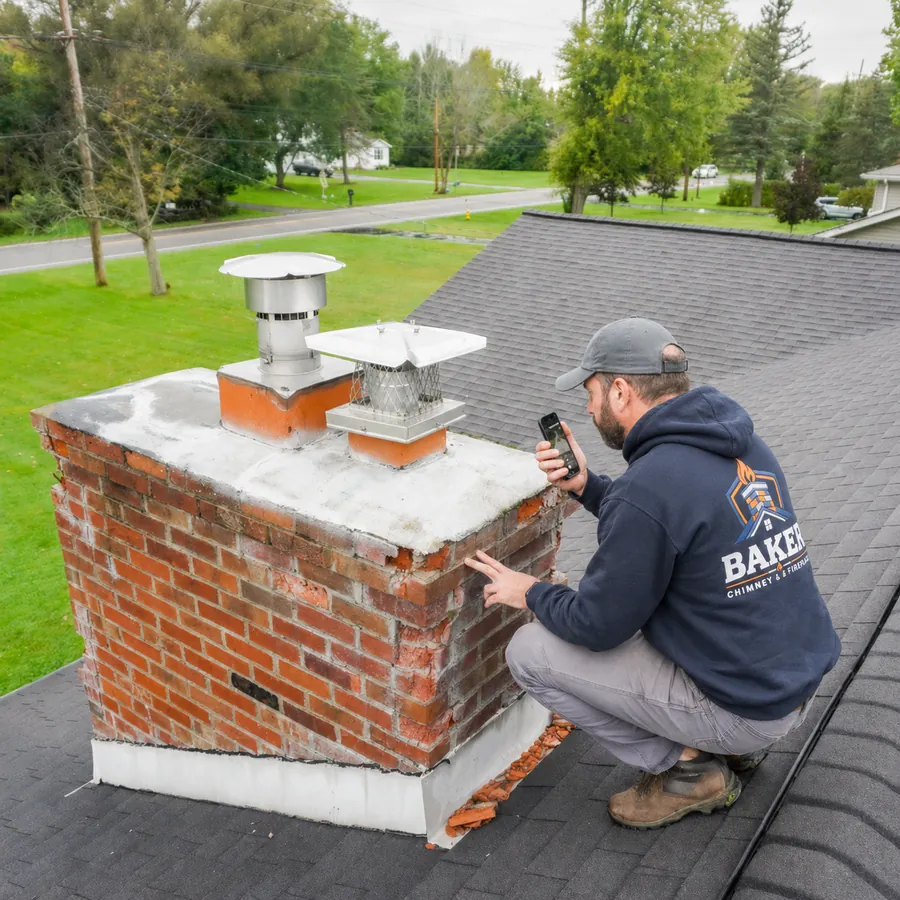
A chimney can look fine from the yard and still have a cracked crown, deteriorating mortar joints, a damaged flue tile or an obstruction you'd never see from the ground. Inspection is how those problems get caught while they're still small.
Colorado weather works on chimneys year-round: snow and ice, freeze-thaw cycles, wind and big temperature swings. An inspection tells you what all of that exposure has actually done to your system — and what, if anything, needs attention.
The accessible parts of the system, inside and out: firebox, damper, smoke chamber and flue from below; crown, cap, masonry and flashing from the roof where access allows. We're looking for cracks, gaps, water damage, deteriorated materials, buildup and obstructions.
Before the burning season, so there's time to fix what's found. After buying a home, so you know what you actually own. After a chimney fire, a major storm or hail. When something changed — new smells, weak draft, water stains near the chimney, or pieces of mortar or tile showing up in the firebox.
A clear explanation of what we found and what it means, with photos where useful. If repairs are worth considering, we explain the options and let you decide. If everything looks good, we tell you that too.
These services often go hand in hand with chimney inspection:
EPA safety guidance recommends annual inspection of wood-burning appliances and chimneys. Regular inspection is what determines when cleaning or repair is actually needed.
Yes. A chimney-specific inspection before buying tells you the condition of a system that general home inspections often can't fully evaluate.
We document it, explain what it means, and lay out the repair options. You decide how to proceed — no pressure.
Baker Chimney & Fireplace serves three primary hubs and the communities around each, within roughly a 45-mile radius. Find your city below.
Send a few details and we'll follow up. Prefer to talk it through? Call 720-835-1233 — 24/7.