Chimney leaks are frustrating because water rarely shows up where it gets in. A stain on the ceiling can start at a cracked crown, failed flashing, a missing cap, saturated brick — or several of those at once. Fixing the wrong one leaves the stain coming back.
That's why leak work starts with diagnosis. We check each of the usual entry points in order and match the repair to the actual source.
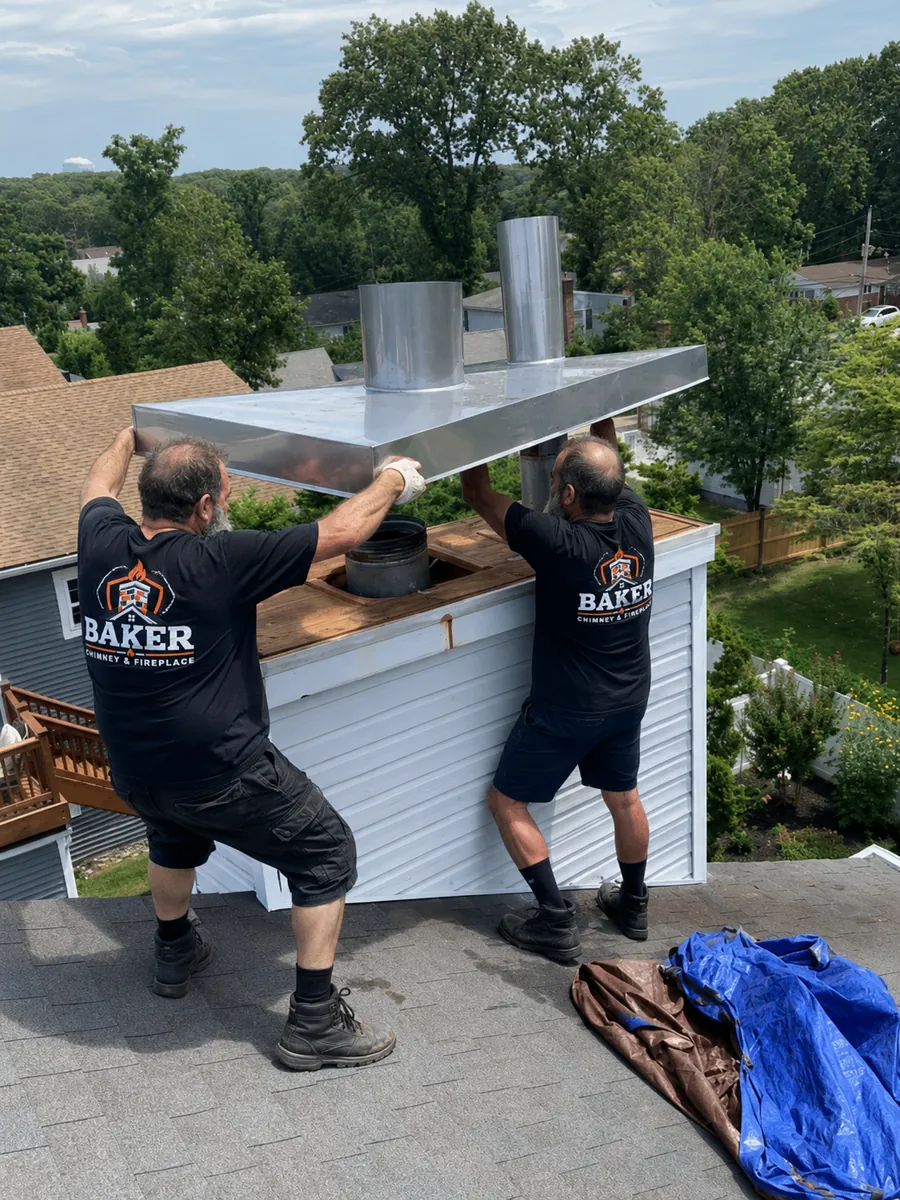
The crown — the concrete top surface — cracks with age and freeze-thaw cycles, letting water straight into the structure. Flashing at the roofline pulls loose or corrodes. A missing or damaged cap lets rain and snow fall directly down the flue. Aging masonry absorbs water like a sponge. And on prefab systems, rusted chase covers are a classic culprit.
Once the source is identified, the repair is matched to it: crown repair or replacement, new flashing, a properly sized cap, masonry repair and waterproofing, or a new chase cover. Where several small issues combine, we'll lay out what's essential now versus what can wait.
These services often go hand in hand with chimney leak repair:
Wind-driven rain finds paths that ordinary rain doesn't — marginal flashing, hairline crown cracks, or porous masonry. Those paths tend to widen with time, so occasional leaks usually become regular ones.
Sealing helps porous masonry but won't fix a cracked crown or failed flashing. Sealing over the wrong problem hides it while damage continues underneath. Diagnosis first.
Usually, but not always — roof issues near the chimney can mimic it. Part of our job is confirming the water's actual path.
Baker Chimney & Fireplace serves three primary hubs and the communities around each, within roughly a 45-mile radius. Find your city below.
Send a few details and we'll follow up. Prefer to talk it through? Call 720-835-1233 — 24/7.