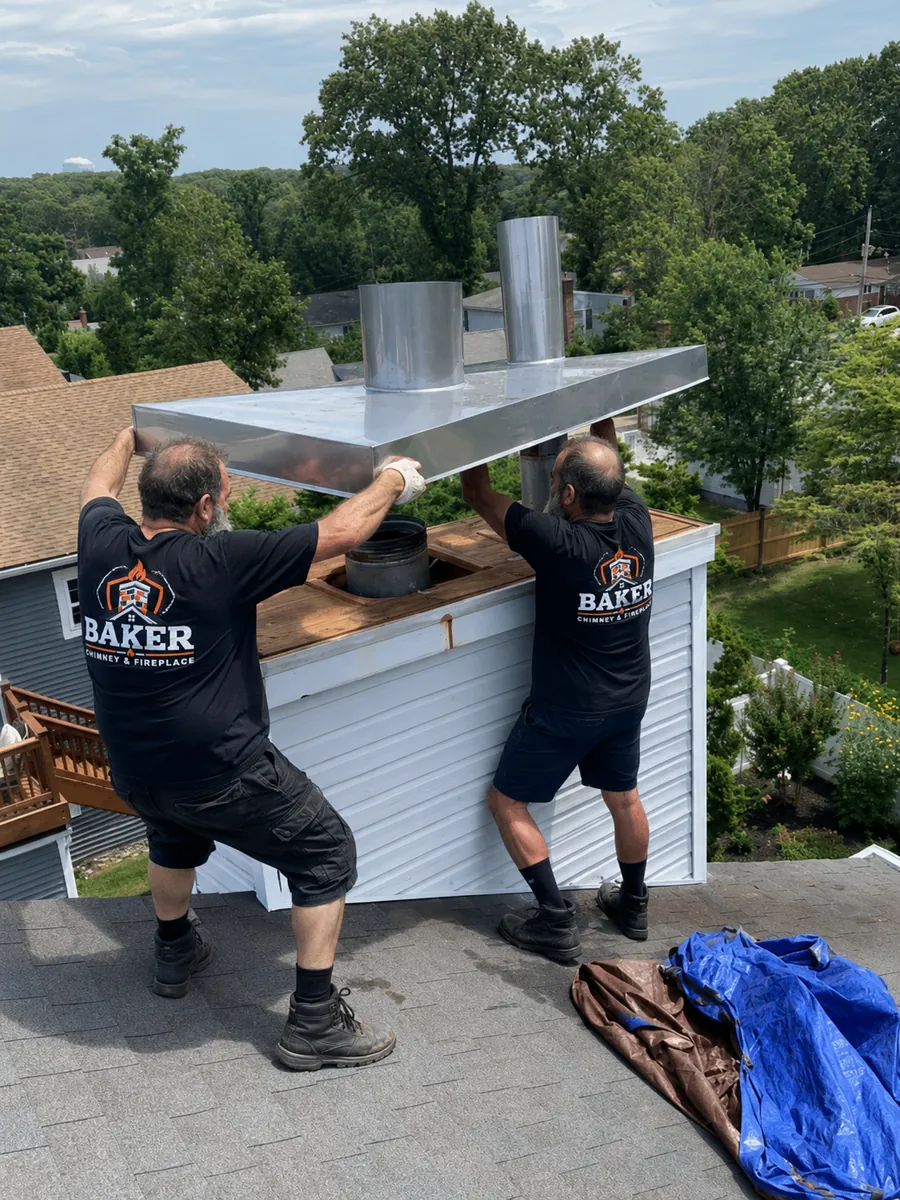
Homes with factory-built fireplaces usually have a framed chase instead of a masonry stack, topped with a sheet-metal chase cover. Original builder-grade covers are often flat galvanized steel — they pool water, rust from the middle out, and eventually leak into the chase.
If you can see rust streaks running down your chimney chase siding, the cover is telling you something. Replacing it before water damages the framing underneath is the cheap version of this repair.
Corrosion-resistant material. A cross-broken or sloped top so water sheds instead of pooling. Properly sized collars around the flue penetrations. Drip edges that carry water past the siding. Measured and fitted to the actual chase — not a near-enough stock size caulked into place.
Rust visible on the cover or streaking on the chase below it. Water stains inside near the fireplace. Standing water on the cover after storms. A cover that flexes, rattles or has lifted at the edges in wind.
These services often go hand in hand with chase covers:
The chase cover is the large metal lid closing off the top of a framed chase; the cap sits above the flue pipe itself. Prefab systems typically need both in good condition.
Most builder-grade covers are flat, light-gauge galvanized steel. Water pools on the flat surface and rust does the rest.
Yes — covers are fabricated to the measured dimensions of your chase and flue penetrations.
Baker Chimney & Fireplace serves three primary hubs and the communities around each, within roughly a 45-mile radius. Find your city below.
Send a few details and we'll follow up. Prefer to talk it through? Call 720-835-1233 — 24/7.