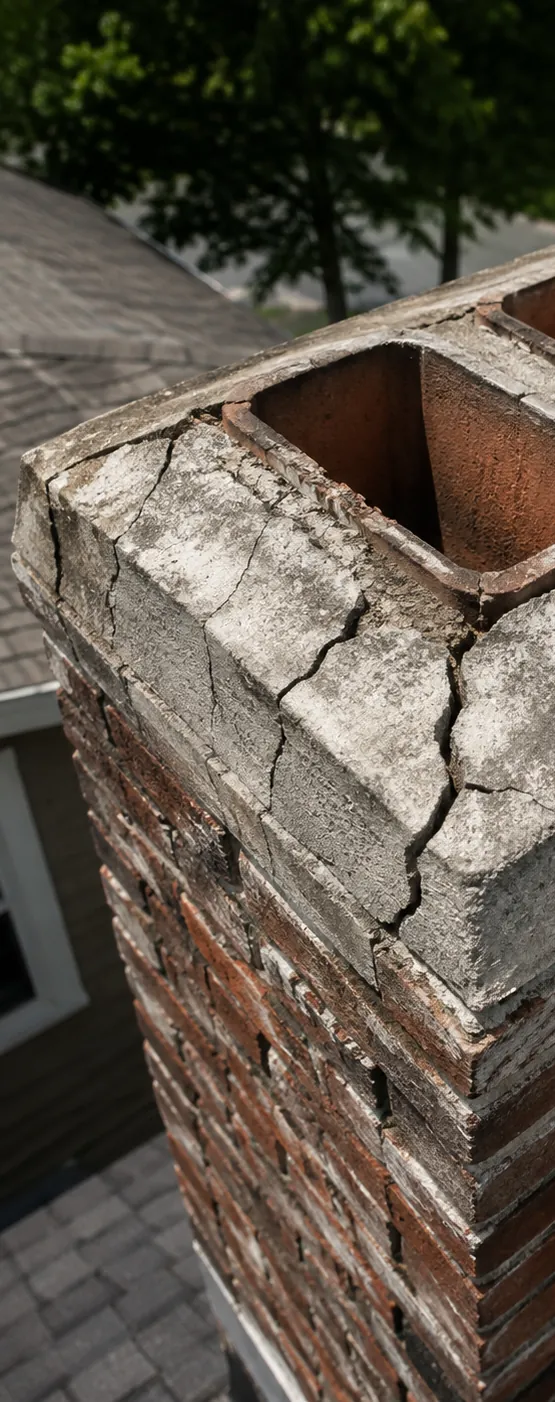
Chimney damage rarely announces itself all at once. A hairline crack lets in a little water; Colorado's freeze-thaw cycles widen it; a few seasons later mortar is crumbling and the repair is bigger than it needed to be. The right time to repair a chimney is when the problem is still small.
Baker's approach starts with understanding the cause, not just the visible symptom. We repair what can reasonably and safely be repaired, and we recommend replacement only when it's genuinely the better long-term answer.
Cracked or deteriorating crowns. Missing or damaged caps. Failing flashing where the chimney meets the roof. Spalling brick and eroding mortar joints. Damaged flue liners. Leaks that show up as stains on ceilings or walls near the chimney. Draft and smoke problems traced to damaged components.
Inspect carefully first — the visible damage is often the result of a problem that started somewhere else. Explain what we found and why it happened. Present the practical options, from targeted repair to larger restoration. Do the chosen work properly, protect the home while we work, and clean up when we're done. That's the Baker Standard.
These services often go hand in hand with chimney repair:
Common signs: pieces of mortar or brick on the roof or in the firebox, white staining on masonry, water stains near the chimney inside the home, a visibly cracked crown, or a leaning stack. An inspection confirms what's actually going on.
Some can, some can't. Masonry and sealant products have temperature requirements, and snow affects roof access. We'll tell you honestly what can be done safely and what should wait.
Only if a rebuild is genuinely the right answer. Our principle since 1997: repair when possible, replace when necessary.
Baker Chimney & Fireplace serves three primary hubs and the communities around each, within roughly a 45-mile radius. Find your city below.
Send a few details and we'll follow up. Prefer to talk it through? Call 720-835-1233 — 24/7.