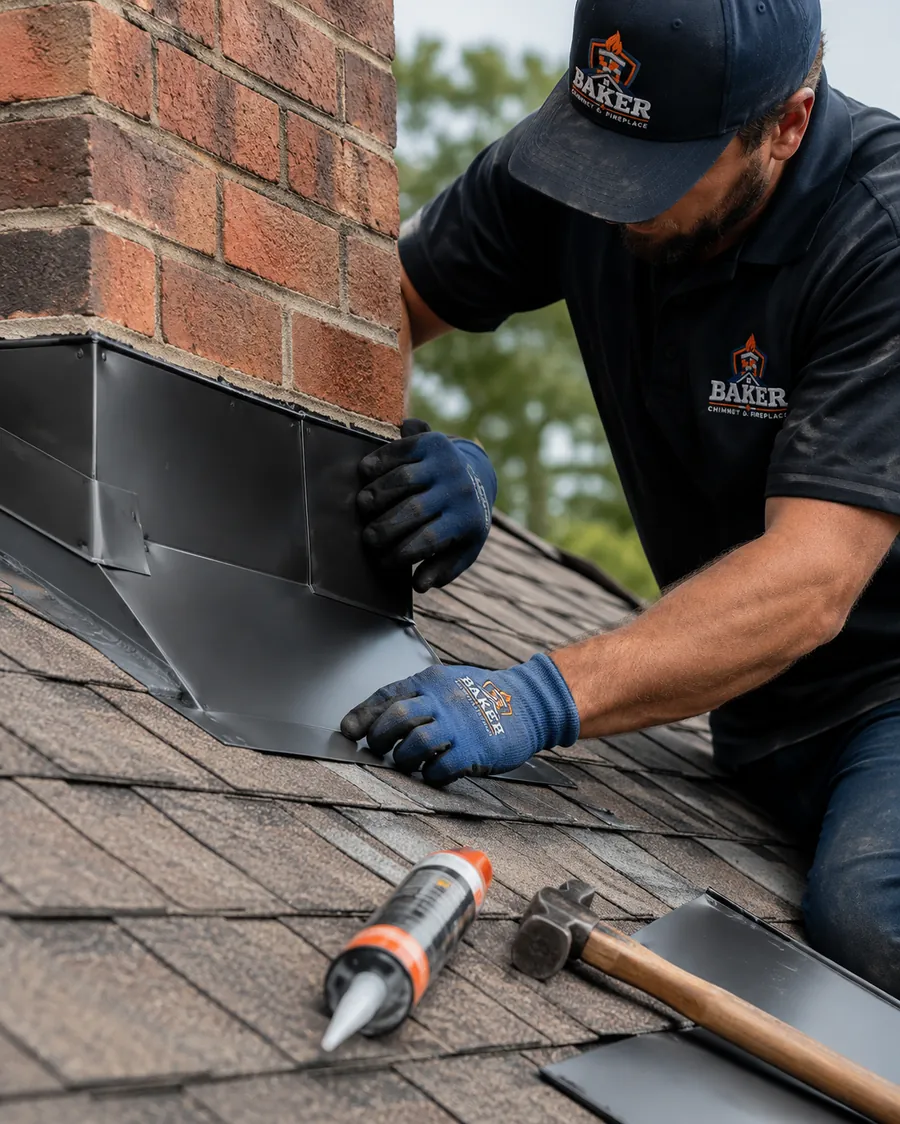
Flashing is the layered metal system that seals the joint between the chimney and the roof. It's a demanding job: the roof moves, the chimney doesn't, and the flashing bridges the two through every storm, snow load and temperature swing.
When flashing fails — pulled nails, lifted step flashing, cracked sealant, corrosion — water follows the chimney down into the roof structure. It's among the most common sources of the 'mystery' ceiling stain near a fireplace.
Freeze-thaw cycles and roof movement work fasteners loose. Sun bakes sealants until they crack. Wind lifts marginal metal. Hail — a regular Front Range visitor — dents and compromises it. And flashing that relied on caulk instead of proper step-and-counter layering fails on schedule.
Where the metal is sound, we re-secure and reseal properly. Where it isn't, we replace it: step flashing woven with the roofing, counter flashing cut into the masonry joints and sealed — a system that sheds water mechanically instead of depending on a bead of caulk.
These services often go hand in hand with flashing repair:
Flashing lives exactly on that boundary. We work on chimney flashing routinely and coordinate cleanly with roof work when a project involves both.
As a permanent fix, no. Sealant has a role within a properly layered system, but caulk smeared over failing flashing is a countdown timer, not a repair.
Often yes, weather permitting — roof access and material temperature requirements decide it. We'll tell you straight.
Baker Chimney & Fireplace serves three primary hubs and the communities around each, within roughly a 45-mile radius. Find your city below.
Send a few details and we'll follow up. Prefer to talk it through? Call 720-835-1233 — 24/7.