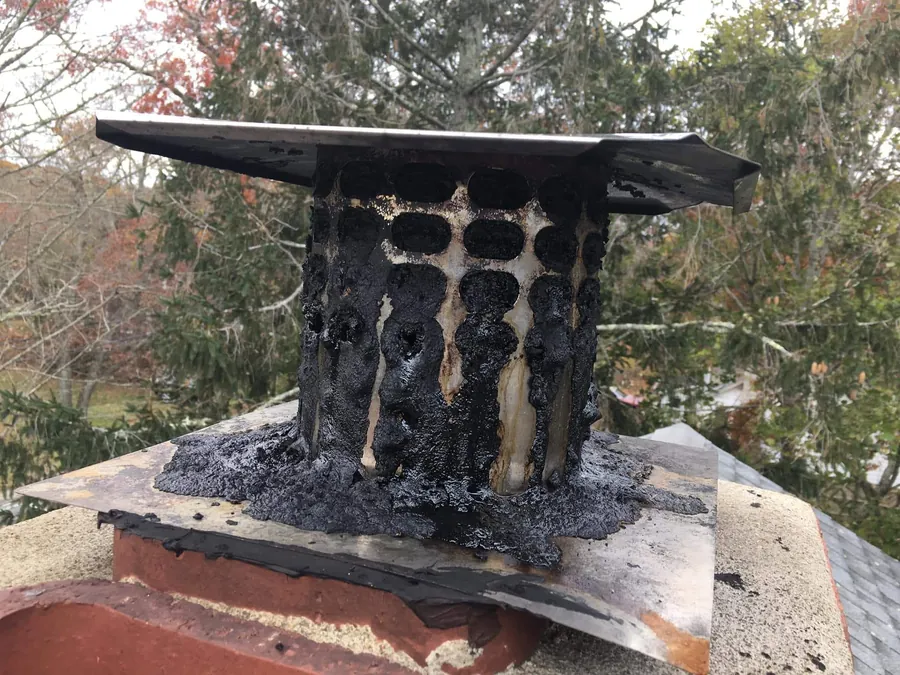
The flue liner is the chimney's inner containment: it keeps flue gases, heat and sparks inside a continuous protected channel from the appliance to the open air. When clay tiles crack or mortar joints between them open up, that containment is compromised.
Liner damage is invisible from the living room, which is why it's typically found during inspection — often with a camera. When it's found, it deserves a proper fix: the liner is a safety component, not a cosmetic one.
Chimney fires — even brief ones — crack clay tiles with thermal shock. Decades of heating-cooling cycles open joints. Water from a failed crown or cap erodes tile and mortar from above. Settling and movement crack rigid clay.
Localized joint and tile repair where damage is limited and accessible. Stainless steel relining — a continuous insulated stainless liner run the length of the flue — where clay tile damage is extensive, or where an appliance needs a correctly sized flue. We match the recommendation to what the camera actually shows.
These services often go hand in hand with chimney liners:
You usually can't from below — tile fragments in the firebox are one visible clue. A camera inspection is how liner condition is properly assessed.
Yes. The liner is what keeps heat and combustion gases contained within the flue. Using a fireplace with a known-compromised liner isn't something we'd recommend.
A continuous stainless flue pipe, typically insulated, installed inside the existing chimney to create a new sealed, correctly sized flue path.
Baker Chimney & Fireplace serves three primary hubs and the communities around each, within roughly a 45-mile radius. Find your city below.
Send a few details and we'll follow up. Prefer to talk it through? Call 720-835-1233 — 24/7.