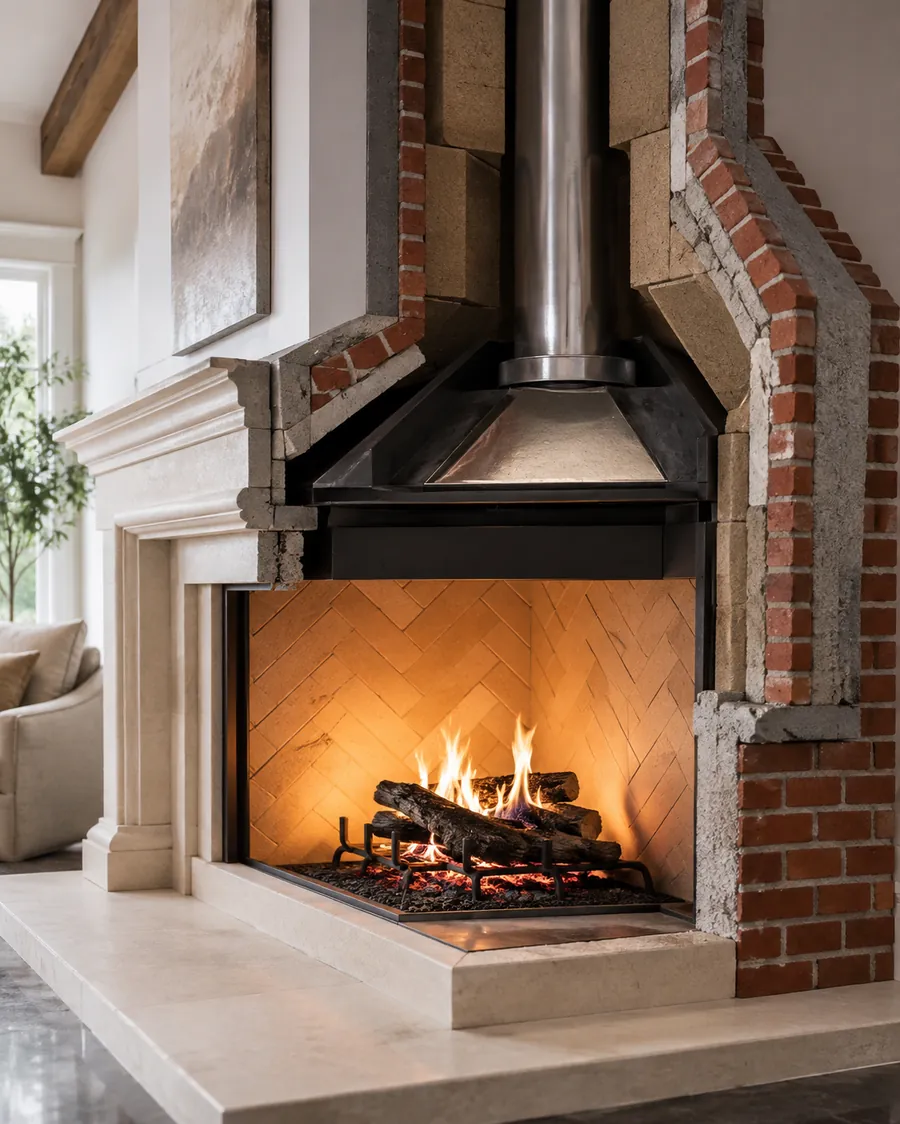
The damper is the movable door in the chimney's throat. Open, it lets smoke draft up the flue; closed, it keeps your heated indoor air from escaping when the fireplace is idle. A damper rusted open is a hole in your home's envelope every cold day of a Colorado winter; one rusted shut makes the fireplace unusable.
Dampers live in a hard environment — heat, creosote, and moisture coming down the flue — so sticking, warping and rust are common on older systems.
Throat dampers that are gummed up or lightly corroded can often be cleaned, freed and adjusted. Warped or rusted-through plates get replaced. Where the original damper is beyond service — or was never effective — a top-sealing damper mounted at the flue exit is often the better answer: it seals with a gasket rather than metal-on-metal, and doubles as a rain guard.
An open flue is engineered to move air out of the house — that's its job. A damper that doesn't seal lets conditioned air do exactly that year-round. It's one of the simpler comfort-and-efficiency fixes a fireplace can get.
These services often go hand in hand with dampers:
Better not to; bent linkage turns a service call into a replacement. Have it looked at.
A damper installed at the top of the flue that seals with a gasket when closed. It typically seals far better than an old throat damper and keeps rain and animals out as a bonus.
When the fireplace isn't in use, yes — an open damper exchanges indoor air with the flue in every season.
Baker Chimney & Fireplace serves three primary hubs and the communities around each, within roughly a 45-mile radius. Find your city below.
Send a few details and we'll follow up. Prefer to talk it through? Call 720-835-1233 — 24/7.