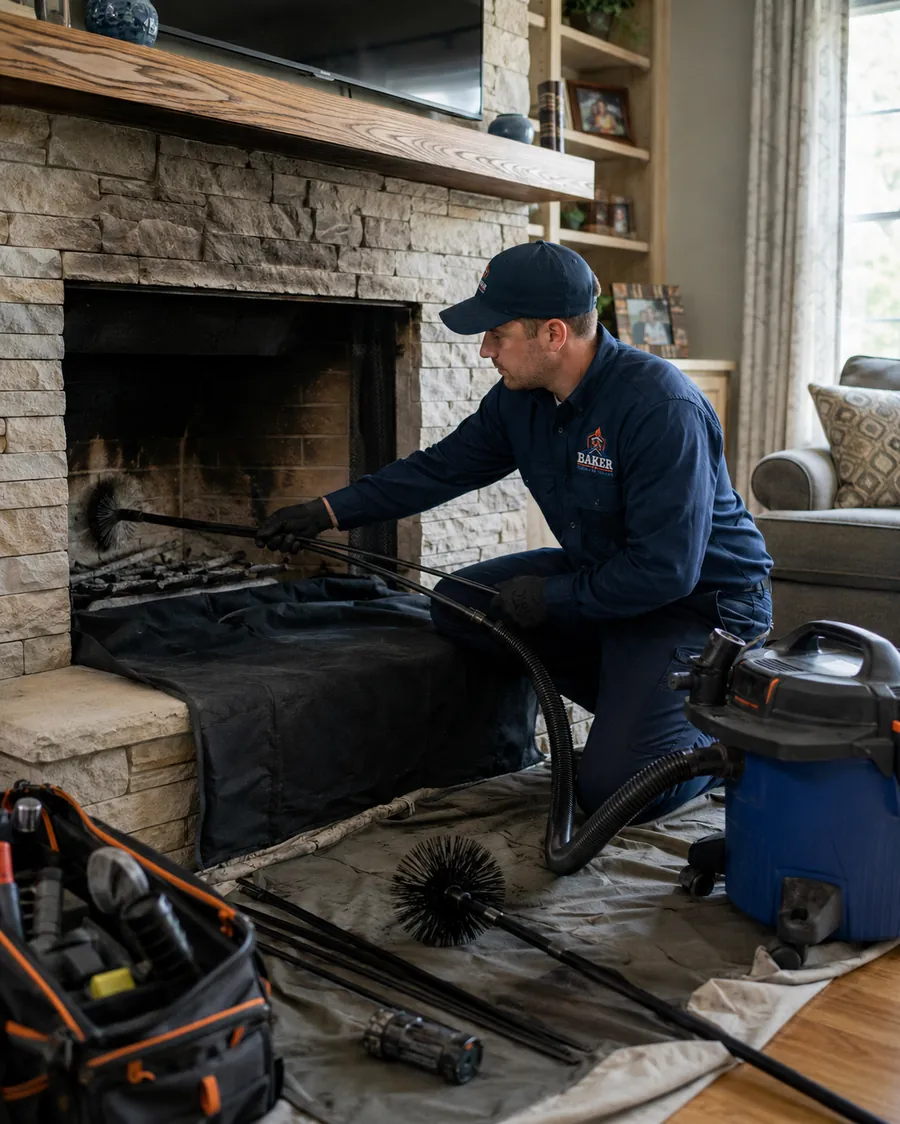
Start by confirming what is actually damaged and what the proposed scope includes. Cost, insurance, tax or replacement decisions are much easier to evaluate once the physical condition is documented clearly.
The most useful way to compare chimney decisions is to separate the condition of the system from the financial question. First determine what is damaged and what repair is actually proposed; then compare coverage, cost or long-term value using the correct documents.
This guide focuses on why is chimney repair so expensive from a Colorado homeowner's point of view. Break down access, height, scaffolding, masonry, liners, custom metal, weather, permits and multi-component failures without inventing Baker pricing.
Compare written scopes, not just totals. Two estimates may look different because one includes access, liner work, metal fabrication or related repairs that the other excludes. Ask each contractor to identify the defect and the component being repaired.
Keep inspection photos, written estimates and invoices. They help when comparing contractors and can also be useful if an insurer, buyer, tax professional or another trade later needs to understand what condition was found and what work was completed.
Compare written scopes, not just totals. Two estimates may look different because one includes access, liner work, metal fabrication or related repairs that the other excludes. Ask each contractor to identify the defect and the component being repaired.
Keep inspection photos, written estimates and invoices. They help when comparing contractors and can also be useful if an insurer, buyer, tax professional or another trade later needs to understand what condition was found and what work was completed.
Compare written scopes, not just totals. Two estimates may look different because one includes access, liner work, metal fabrication or related repairs that the other excludes. Ask each contractor to identify the defect and the component being repaired.
Keep inspection photos, written estimates and invoices. They help when comparing contractors and can also be useful if an insurer, buyer, tax professional or another trade later needs to understand what condition was found and what work was completed.
Compare written scopes, not just totals. Two estimates may look different because one includes access, liner work, metal fabrication or related repairs that the other excludes. Ask each contractor to identify the defect and the component being repaired.
Keep inspection photos, written estimates and invoices. They help when comparing contractors and can also be useful if an insurer, buyer, tax professional or another trade later needs to understand what condition was found and what work was completed.
Compare written scopes, not just totals. Two estimates may look different because one includes access, liner work, metal fabrication or related repairs that the other excludes. Ask each contractor to identify the defect and the component being repaired.
Keep inspection photos, written estimates and invoices. They help when comparing contractors and can also be useful if an insurer, buyer, tax professional or another trade later needs to understand what condition was found and what work was completed.
Call a chimney/fireplace professional when the issue involves the flue, liner, smoke chamber, crown, cap, masonry, venting, gas components, significant water entry or structural movement. The goal of the visit should be to document the defect and match the repair to the actual component.
No. A contractor can document the physical condition and scope of work, but coverage and tax treatment are determined by the policy, law and the appropriate professional.
The scopes may include different components, access methods, materials or assumptions. Compare what each proposal actually repairs before comparing totals.
It can be reasonable when the scope is large or unclear. Ask both companies to document the defect and explain why their proposed repair addresses it.
Publish P1 articles first in small batches, review the rendered pages and internal links, then publish P2 and P3. Do not publish 99 URLs simultaneously just to increase index count.
1. How Often Should You Have Your Chimney Cleaned in Colorado? — `/blog/how-often-chimney-cleaning-colorado/` 2. Chimney Inspection vs. Chimney Cleaning: What’s the Difference? — `/blog/chimney-inspection-vs-cleaning/` 3. What Does a Chimney Inspection Look For? — `/blog/what-does-chimney-inspection-look-for/` 4. Level 1 vs. Level 2 Chimney Inspection: Which One Do You Need? — `/blog/level-1-vs-level-2-chimney-inspection/` 5. What Is Creosote and Why Does It Build Up in Chimneys? — `/blog/what-is-creosote-chimney/` 6. Signs of a Chimney Fire: What Homeowners Should Know — `/blog/signs-of-chimney-fire/` 7. Why Is Smoke Coming Into My House From the Fireplace? — `/blog/fireplace-smoke-coming-into-house/` 8. Why Does My Fireplace Smell Smoky When It’s Not Burning? — `/blog/fireplace-smells-smoky-not-burning/` 9. Why Is Water Coming Into My Fireplace or Chimney? — `/blog/water-coming-into-fireplace-chimney/` 10. Chimney Crown Repair: What It Is and When It’s Needed — `/blog/chimney-crown-repair-guide/` 11. Chimney Cap vs. Chimney Crown: What’s the Difference? — `/blog/chimney-cap-vs-crown/` 12. Chimney Flashing Leaks: How Water Gets Around the Roofline — `/blog/chimney-flashing-leak/` 13. Colorado Freeze-Thaw Damage: What It Can Do to Brick Chimneys — `/blog/colorado-freeze-thaw-chimney-damage/` 14. Cracked Chimney Flue Liner: What Does It Mean? — `/blog/cracked-chimney-flue-liner/` 15. Chimney Liner Repair vs. Replacement: How the Decision Is Made — `/blog/chimney-liner-repair-vs-replacement/` 16. Firebox Cracks: When Should a Fireplace Be Repaired? — `/blog/firebox-cracks-repair/` 17. Gas Fireplace Pilot Light Won’t Stay Lit: Common Causes — `/blog/gas-fireplace-pilot-wont-stay-lit/` 18. Gas Fireplace Pilot Is On but the Main Burner Won’t Light — `/blog/gas-fireplace-pilot-on-burner-wont-light/` 19. Why Does My Gas Fireplace Turn Off After a Few Minutes? — `/blog/gas-fireplace-turns-off-after-few-minutes/` 20. How Often Should a Gas Fireplace Be Serviced? — `/blog/how-often-gas-fireplace-service/` 21. Wood Fireplace vs. Wood Insert: What’s the Difference? — `/blog/wood-fireplace-vs-insert/` 22. Is a Fireplace Insert Worth It for a Colorado Home? — `/blog/fireplace-insert-worth-it-colorado/` 23. Colorado Chimney & Fireplace Maintenance Checklist Before Winter — `/blog/colorado-chimney-fireplace-winter-checklist/` 24. Colorado Wood-Burning Restrictions: What Denver-Area Homeowners Should Check — `/blog/colorado-wood-burning-restrictions-denver/` 25. Chimneys in Colorado: How Snow, Ice and Temperature Swings Affect Masonry — `/blog/snow-ice-temperature-chimney-colorado/` 26. Chimney Repair Cost in Colorado: What Actually Affects the Price? — `/blog/chimney-repair-cost-colorado/` 27. Chimney Cleaning Cost in Colorado: What Changes the Price? — `/blog/chimney-cleaning-cost-colorado/` 28. Do I Need a Full Chimney Rebuild? How to Evaluate a Large Repair Quote — `/blog/do-i-need-full-chimney-rebuild/` 29. Does Homeowners Insurance Cover Chimney Repair in Colorado? — `/blog/homeowners-insurance-chimney-repair-colorado/` 30. Can Chimney Repairs Be Done in Winter in Colorado? — `/blog/chimney-repair-winter-colorado/` 31. Who Do You Call for Chimney Repair? — `/blog/who-to-call-for-chimney-repair/` 32. Chimney Pulling Away From the House: What Can Cause It? — `/blog/chimney-pulling-away-from-house/`
Call Baker Chimney & Fireplace anytime, or request service online. Serving Denver, Colorado Springs, Fort Collins and the Front Range.
Request ServiceTalk to Baker Chimney & Fireplace about cleaning, inspection, repair or installation. Phone lines are answered 24/7 across the Front Range.
720-835-1233